 |
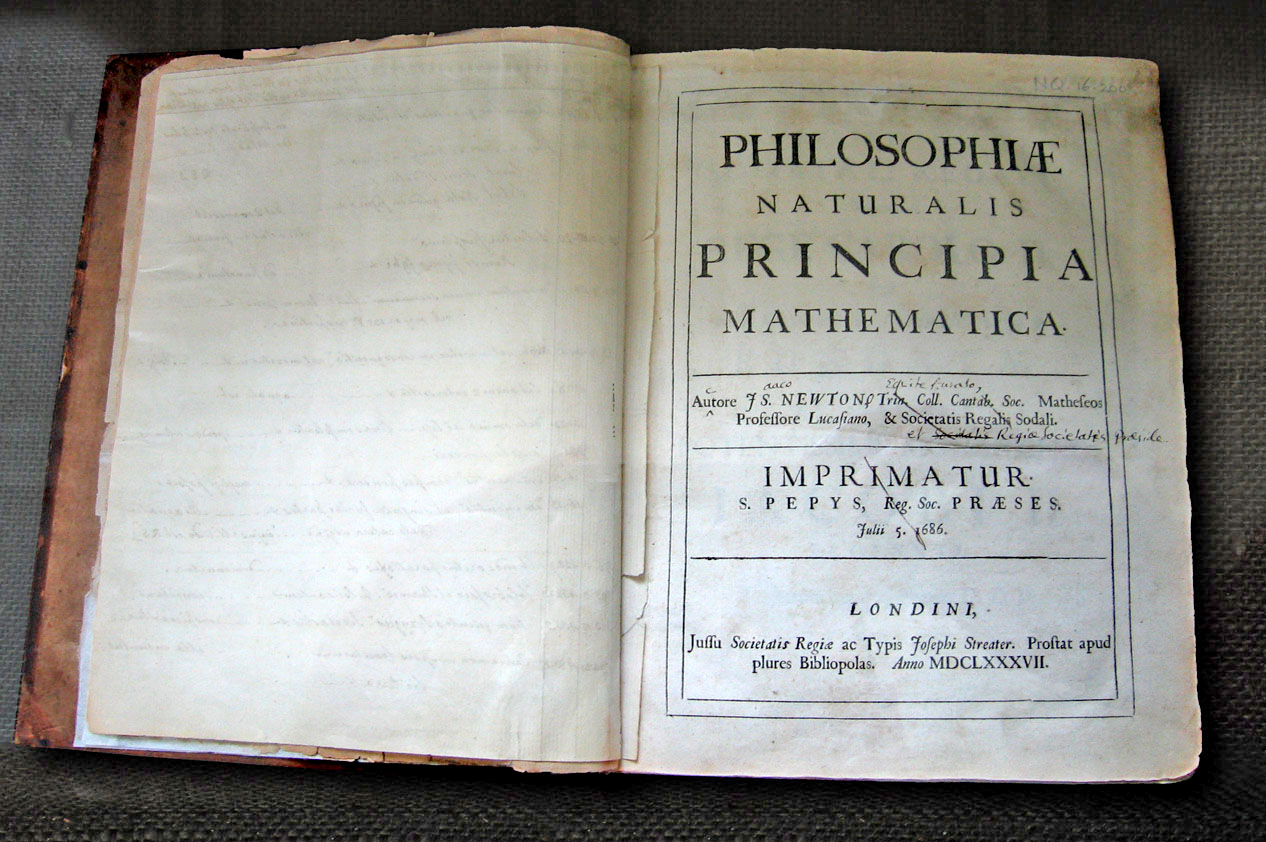
| Newton's Principia with the imprimatur of Samuel Pepys. |
Index auctorum et librorum prohibitorum
However, it was not until 1559 that the first Index, known as the Pauline Index after Pope Paul IV, was issued. Officially entitled the Index auctorum et librorum prohibitorum (Index of prohibited authors and books), this precursor to the later Index was seen as controversial and excessively restrictive. All books by Protestant reformers, including Luther, Zwingli, Calvin and others were banned, as were any translations of the Vulgate Bible (as mentioned in the previous post, the preserve of Protestants), and anything deemed heretical, superstitious, immoral or obscene. The Talmud and Koran were also banned. Additionally, there were many works which were seen to have questionable sections, which needed censoring before publication due to content which conflicted with church teachings. Many classical authors, including Plato, Aristotle, Virgil, Cicero and many others were included on this list (known as the expurgatio list) because their writings included pagan themes. Books translated by Protestants and even books published in cities that were considered Protestant were also filtered or even banned.
Council of Trent 1562
 |
| Pius IV 1499-1565. By Bartolomeo Passarotti |
Commentary
Research for this post was somewhat awkward; I had found a few bits and pieces for the first post, which turned out to be quite useful, and was also told about some other resources which I had not found by a reference librarian from Moonee Valley Libraries (this was the result of my query for one of the discussion board topics). One thing that all of the resources have in common though, is that they do not really deal much with the centuries in the middle - they give information (often quite detailed) about the 16th century advent of the Index, and then again about the 20th century end, but very little in between times. As I can only work with what is available, this is reflected in this post, and will be in the next post as well. I can only suppose that those intervening centuries were fairly uneventful, with the successive editions of the Index being updated by the congregatio indicis without any fanfare - I am sure that if there were any real controversies, the information would be out there, as everyone loves a scandal.
References
Doyle, B 1997, 'Note on an index worth shelving', U.S. Catholic, May 1997, p. 36.
Halsall, P c1998, 'Index librorum prohibitorum, 1557-1966', Modern History Sourcebook, viewed 11 April 2011: http://www.fordham.edu/halsall/mod/indexlibrorum.html
Heneghan, T 2005, 'Secrets behind the forbidden books', America, 02 February 2005, pp. 222-227.
1910, 'Index of Prohibited Books', The Catholic Encyclopedia, viewed 11 April 2011 on New Advent: http://www.newadvent.org/cathen/07721a.htm
'Index librorum prohibitorum', Timeline Index, viewed 11 April 2011: http://www.timelineindex.com/content/view/776
Schlumpf, H 2010, 'Does the church still ban books?', U.S. Catholic, October 2010, p. 46.

No comments:
Post a Comment